The short version
Most will know that marketing has changed significantly over the past ten or so years but even many marketing experts struggle to put their finger on exactly what underpins what they do. My own soul searching has led me to sum up marketing today as being about “improving or extending an organisation’s offering to a point where their customers will do the marketing for them”.
Through seeing tech start-ups gain massive traction largely by just being amazing, I’ve come to realise that the entrepreneurial disciplines they are applying are also directly applicable to what we’ve been doing in the online marketing world. Finally I re-open the debate about what we should call modern marketing and make my case for “entrepreneurial marketing”.
The internet has changed marketing
An ever increasing number of marketers have accepted that marketing has dramatically changed forever. Whilst almost all see this as a shiny future, the journeys people have taken in reaching this conclusion are many and varied.
There are coders who embraced search engine optimisation back when it was possible to put a few words on a page and gain ranks. They’ve since grown and adapted as search engines have become more sophisticated. There are long term bulletin board enthusiasts who’ve morphed into social media enthusiasts and there are publishers and journalists who’ve found new powers in being able to escape print. There’s also the 20 something (or even younger) “digital natives” who can see that what they are being taught about marketing doesn’t fit with their own personal experiences and of course there are traditional marketers who’ve felt an earthquake.
My own journey started in 1998 when I was working for a start-up venture in a corporate environment, where I found myself dumped with something called a “website” to look after. This task tended to be given to people in IT so it was quite unusual for it to be given to someone working on the marketing side of things, but that’s what happens in start-ups; there are always more roles than people (even though the company numbered about 40 at the time). So I saw my role as not to make sure the site stayed up, but to use it as a tool to attract customers.
I set about teaching myself about search engines rankings and before I knew it I stumbled across an SEO tool that I realised could be adapted for a business idea I had put up on my pin board a year or two before. The urge to pursue the idea proved irresistible and every spare moment (and a good bit more) was spent reading anything I could about what made websites tick and how they should be marketed.
One last thing I did though before leaving the security of employment was to present a plan for taking my employer’s website to the next level. What I delivered is what many today would recognise as an inbound or content marketing plan. It included what was effectively a blog and in-depth content resources (white papers and the like), forum marketing and even a webcam (well it was 1998 and who didn’t want a webcam then?!).
Like many a good content plan, it never came to fruition. I moved on, senior management liked it but didn’t truly see the value and the business collapsed anyway.
I was lucky though because somehow I had stumbled on the key to success in the forms of marketing that are only now becoming mainstream. I instinctively realised that success was really all about doing things for the target audience. It was an instinct though, not something that I was fully conscious of or could easily articulate. This I have discovered, is not uncommon.
Returning to all those marketers embracing this “new” brand of marketing. They’ve all gained the “instinct” in their own way but still very few of them are actually able to articulate what really underpins what they do. They get “it”, but they can’t put their finger on it. Now I’m not talking about those people “doing social media because that’s what everybody else is doing”, I’m referring to the deep thinkers; the sort of people who inspire me and who I learn from everyday.
The Attacat Way
This really hit home for me about a year ago when, determined to improve our processes and procedures, I set about working with the Attacat team to get down on paper how we do things. I presented a vision of all our clients having a comprehensive marketing plan that would drive how we would progress their business and we then sat down to create the blueprint of that plan. This became known internally as “The Attacat Way”.
In my presentation was a slide that said:
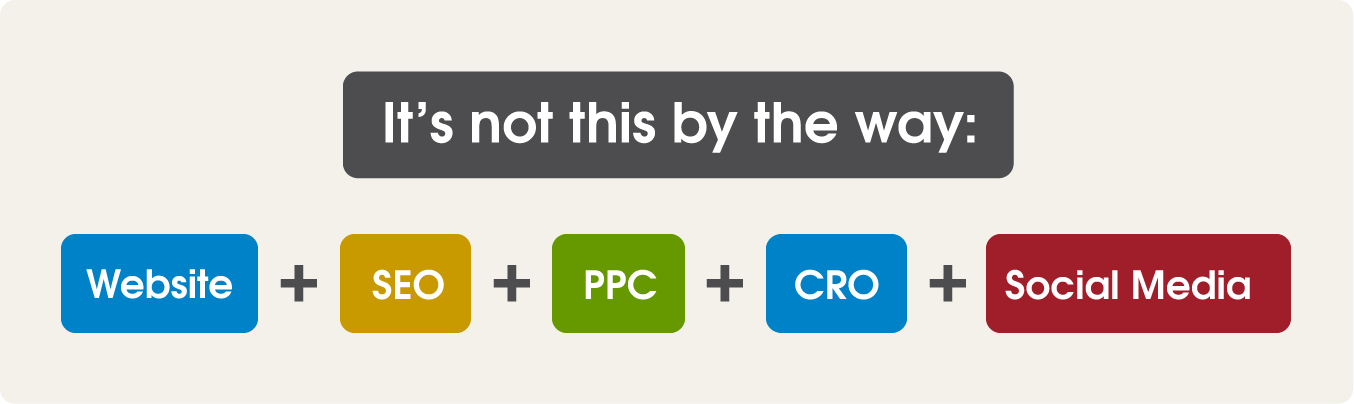
But what is it then? We set about defining what it is with great gusto and around a 150 post-it notes later we came up with something that if you simplified it would look a little like this:

I was frustrated, massively frustrated. Instinctively I knew this wasn’t right but could I articulate what wasn’t right? Could I hell. So I had a frustrated team, effectively paralysed. We couldn’t make any progress until I could articulate what wasn’t right and the phrase “Attacat Way” was an instant route to despair for the whole company.
And so continued my soul search. And after a while…
…Out popped “Entrepreneurial Marketing”
There have been many light bulb moments in the last 12 months, some brighter and longer lasting than others. The one that is still on is the one that says “actually, it’s not really marketing we are doing at all, instead we are making our clients remarkable through improving or extending their offering so their customers actually do the marketing for them.”

Assuming you buy that, it then follows that if we are striving to offer “remarkable things” then we need to think and act with an entrepreneurial mindset (whether the business we are working for is entrepreneurial or not). If you want your customers to talk about you, you need to provide them with something that doesn’t already exist – which is exactly what entrepreneurs do.
This view has been cemented by my exposure to the tech entrepreneur community in Edinburgh in particular and through gaining insights into how they work. I’ve seen how these companies are gaining massive visitor numbers, not through advertising but almost entirely through creating things that people want. They are laser focused not on gaining visitors but on working out how to create something that visitors actually want. It’s only after they’ve discovered what visitors want that they scale, but even then they do it in a way that sees their growth constrained only by the inherent attractiveness of their offering, not by their ability to bang a drum.
And if you think about it, much of what we are doing when we are “internet marketing” is creating things visitors want:
- a blog that provides a service in the form of regular commentary on topic X
- an infographic that’s of interest to a target market
- a piece of software that’ll help our prospects get a job done, which we offer for free in return for some good will
- a twitter stream that might routinely entertain
- a white paper that solves a customer problem
And so the list could go on. In each case, applying these relatively new and increasingly popular scholarly theories of entrepreneurship, such as that espoused by Eric Ries in “The Lean Start-Up” or Bill Aulet’s “Disciplined Entrepreneurship”, to the process of creating these resources for our target market will decrease the inherent risk in seeking to create things that don’t exist currently.
All these things also work better, as people are discovering, if they are part of a coherent vision (ever spent an hour with an entrepreneur and not heard the word “vision”? A cola bottle says you haven’t). If we, as marketers, see all the “content” and “things” we create as part of the overall offering a company gives its customers and prospects rather than seeing them as things that make us feel like we are doing modern marketing, then I feel success is much more likely. In short your marketing should be part of the vision for the company, not something that’s tacked on afterwards.
Where do things like SEO fit into all this?
Well SEO is an outcome of creating things people want, not a strategy or tactic in it’s own right. Likewise social media: the large amount of failure in social media is down to the fact that marketers aren’t actually offering what people want. That’s a shock to those who’ve been used to using large budgets to give the impression that a consumer has no other option. Conversion Rate Optimisation? Well bless it, it’s all about discovering what people want. PPC? It’s a bit of a halfway house between “old” and “new” but there is still a discount for those who offer what customers want. Display Advertising? That only works if you offer what someone wants in the first place. The same is pretty much also true of Public Relations. (If you want to learn more about these concepts then dive into our free online marketing training)
So the soul search for the Attacat Way has led to this: we improve or extend our customers offerings. And the phrase we attach to this is “Entrepreneurial Marketing”.
What another new bloody buzzword? You’re joking right?
Sorry I’m not, I just don’t like the other phrases that are out there, even if I buy into the vast majority of what their proponents offer. Take the following for example:
But what’s wrong with “Internet Marketing”?
This is the phrase Attacat has historically pinned itself to as the majority of what we do is online. My soul search however has made me realise that the mindset we’ve been applying is also relevant to much of the offline marketing world. Running a physical event for example adds to a company’s offering.
“Content marketing”?
All the rage I know, but I can’t get away from the fact that when you say “content marketing” people start thinking about blog posts and infographics. I know you can stretch the definition of content to cover all sorts like software, training courses etc but its a hard one.
“Permission marketing”?
This is a phrase that’s never gained the traction it deserves in my opinion. I find the insights of Seth Godin (the man behind the phrase) utterly impressive but maybe because permission is only a part of his overall philosophy it’s never taken off.
“Inbound marketing”?
There is no doubt that this phrase has gained traction and if I’m going to go on a crusade to bring “Entrepreneurial Marketing” into the common lexicon, this is the Usain Bolt of marketing phrases. It’s going to be difficult to overtake.
I love the implied idea of getting people to come to you rather than going to them (the magnet instead of the megaphone).
So why don’t I like it? In part because too many people have associated it with 6 tweets a day and a blog post a week type of tactics or as I said at the beginning “Website + SEO + PPC + CRO + Social Media”. I’ve got nothing against tweeting and blogging, quite the contrary. I just find it soul destroying when there isn’t an underlying strategy.
I know the best “inbound marketer” will instinctively do it with a strategy but as a movement I feel it misses out by not seeking to challenge the fact that what many companies are trying to market is just something that people don’t actually want. Entrepreneurial marketing on the other hand asks that question before doing anything else.
“Growth hacking”?
Isn’t this just one of those phrases like “link baiting” that shouldn’t be used in front of people who are new to it all?
“Growth” – that’s great, love it. It’s instinctively entrepreneurial. “Hacking” though? To me it implies short-cuts, cheats or pursuing an agenda regardless of how the rest of society may see it. The best growth hackers are totally above board legitimate marketers continually looking for better ways to get things done and are true experts at this thing that we are trying to name. However I’ve seen people calling themselves growth hackers touting tactics on respected publications which in my mind equate to spam or in some cases illegal, deceptive or interruptive tactics.
“Modern Marketing”?
This is another phrase I find really easy to use as it shouts “things have changed, get with the program”. The problem with “modern” though is what comes next. I’ve always thought “post-modern” a bit of a fudge, making up for someone else’s bad decision.
“Entrepreneurial Marketing”!
To me it brings together all that is good about the above phrases. “Content” is one way of delivering an offering or adding to it. By focusing on making something people want, you work to get their “permission” and get them to come to you (aka “inbound”). Entrepreneurship implies “growth” and why else would you want to market for reasons other than growth?
The word conjures up visions of, well…visions, and seeking out opportunities to fill gaps in markets or even making the World a better place through innovation and solving of previously unsolved problems. More importantly it helps to visualise fulfilling a need that people never knew they had.
It also allows, in my mind anyway, the marketer to address the elephant in the room: there are many products and services that simply won’t respond to slapping on some SEO, social media etc because actually there are many other better offerings out there. It implies marketing going to the heart of the business and seeing changing a business as part of the marketing process.
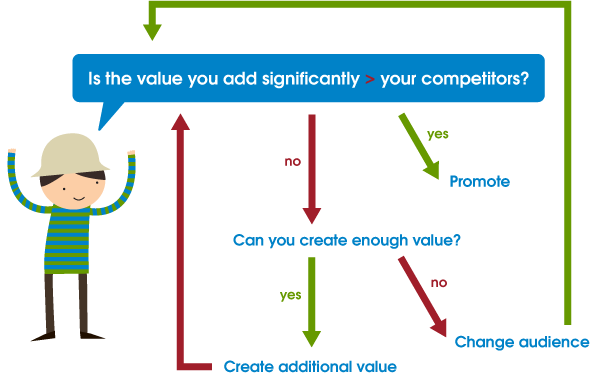
The E word also gives us permission to embrace the still relatively new entrepreneurial branch of business science and apply it to marketing. I personally find that an exciting prospect.
Does it actually matter?
Arguably we could just say “Hey I’ve invented this new thing. Have you heard? It’s called Marketing”. But that would be arrogant. Whether it’s inbound, permission, content or entrepreneurial marketing that you pin your colours to, to define any one of them as just being “marketing” suggests that the philosophy is all encompassing and leaves no room for any other – none of these four cover everything in marketing. I’m confident enough to believe that what I understand as entrepreneurial marketing can be centre stage in the theatre that is marketing, but I’m certainly not arrogant enough to think that a company should indulge in nothing other than entrepreneurial marketing.
So yes, to me it does matter. I believe a name is important as it can imply a mindset, a guiding principle. By putting “entrepreneurial” at the heart of the marketing we continually look to entrepreneurship skills for inspiration. We continually ask questions about how we can do things for customers and prospects that aren’t being done currently or could be being done better. We start with a vision and then look for appropriate tactics. We seek to improve the lives of customers and prospects and generally set out to add value to all those who are exposed to the marketing activities we undertake. Even if it raises the question “why do you call it entrepreneurial marketing?” it begins the type of conversation I feel needs to be had.
Do you like the phrase?
I’ve witnessed plenty of debates in the past around what we should call “it” and they tend to incite ridicule and boredom in equal measure. But I’m interested to hear your thoughts. Does it do anything for you? Have you heard it or even used it before? Am I jumping to the wrong conclusions about the direction of marketing? Are there any negative connotations of the phrase?
This weekend saw the brilliant Turing Festival in Edinburgh; it was full of insight, great speakers, fascinating attendees and of course some free beer. Big thanks to the organisers for putting together a world-class line up here on our doorstep.
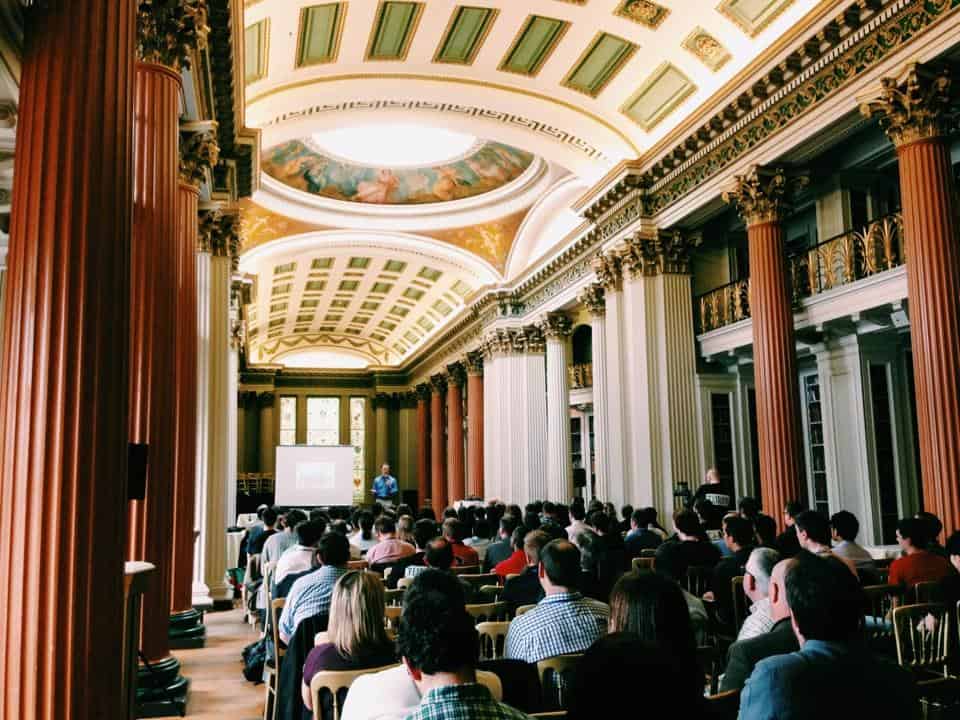
(photo: @cee)
What is the Turing Festival?
If you haven’t heard of it before (where have you been?), the Turing Festival is in its third year and is now firmly positioned as a highlight of the Edinburgh technology calendar. I missed the first two festivals as I was on holiday but I went along expecting lots of deep thinking seminars on technology, its role in society and its future direction, and that’s exactly what I got.
I’ve chatted in the past to one of the organisers and his stated aim is to make it the SXSW (South by South West) of Europe, emulating a technology festival that is perhaps best known as the event that first put Twitter on the map. Taking advantage of the fact that lots of people are here in Edinburgh anyway, attracting big name speakers is relatively easy. Even ‘technology gods’ like a jolly I’m told, and who wouldn’t want the opportunity to talk in the Signet Library (see photo)?
And it seems as if that aim might well be achieved judging by this tweet that appeared shortly after the conclusion of proceedings:
Fantastic couple of days at #TuringFest. This could be Europe’s #SXSW. @turingfestival
— Brian Caulfield (@BrianCVC) August 24, 2013
Having never been to SXSW I cannot say whether or not that aim is being achieved, but the important thing to me is the festival demonstrated the progress that Edinburgh is making in becoming a centre for tech entrepreneurship.
My duty: live blogging
As I left the office on Thursday evening nonchalantly saying “Have a good weekend, I’m off to the Turing Festival tomorrow” I was reminded that I have a moral obligation. It is the expectation (well OK, my expectation) that if the company pays to send you on a jolly (aka conference) then part of the deal is to live blog – I’m a great believer that a bit of typing promotes active listening you see.
I can hardly expect the team to do it if I’m not willing can I? So Friday and Saturday had me posting my notes furiously, but rather than blog I thought I’d see how Google+ fared. Links to my notes from each talk I went to are below but first….
Some highlights
- Nick D’Aloisio: I’m not sure what to say about the $30 million wonder boy Nick D’Aloisio talking about his life as a businessman given that he’s now nearly reached the ripe old age of 18 but it certainly punctuated a fairly breathless Entrepreneurship session on Friday morning.
- Morning: The morning also included 7 great random thoughts from Brian Cauldfield and my particular favourite of the morning: a wonderfully upbeat talk from John Peebles on just how good Scotland is as a place to start a tech-business (a talk that John himself sums up in his own recap of the festival as “The grass is always greener. Make sure you’re shipping something.”). Other talks focused on training the entrepreneur and there was also a little joyous controversy when Jim McKelvey (founder of Square and highly proven entrepreneur) joined the panel discussion and started of by stating his belief that you should just get on with it rather than worry about learning to be an entrepreneur. This kicked off a fascinating discussion on the pros and cons of incubators and accelerators (which I judged to be a draw!).
- Future of Money: Jim continued were he left off in the afternoon with his talk on the past of Square as part of the Future of Money session. His highly entertaining talk included describing the credit card processors as parasites despite the fact that Visa were next on stage. Visa though did a good job of explaining their roadmap for the immediate future giving me hope that it will not be too long before I can dump the credit cards in favour of my mobile.
- If that talk was firmly in the immediate future then Mike Hearn from Bitcoin and Google took us well into the future with a vision of money 50 years down the line, imagining a lovely redhead called Jen, self-funding-self-driving cars, frictionless capitalism, quadracopters delivering water at the top of Munroes and taxation-killing crowd-funding. I can’t wait!
- Digital distribution: The last session on Friday was on digital distribution and it was great to hear Edinburgh University indulging in some real search engine optimisation: their free Massively Open Online Courses (MOOCs) are not only proving to be a real success but they are also driving rankings on Google. Great to see them at the front of the pack in the changes sweeping through higher education.
My notes from the Saturday sessions were rather less thorough after Friday’s free beer, but the quality of the speakers didn’t suffer.
- Trends: Local boy Andrew Girdwood did a great whistle stop tour of the current trends in digital advertising and the panel talk produced some great insights:
Is it me or does it feel like everything @jobsworth says should be chiseled into stone? *and* he’s sitting on a throne #turingfest
— Sheila Averbuch (@sheilaenn) August 24, 2013
- Startups: It was also great to see some really exciting local start-ups being given the opportunity throughout the festival to shine along side the international speakers including FanDuel, Stipso, Administrate and Distrify, all of whom are proving Scotland’s credentials.
My personal favourite talks were the two marketing related talks from Brian Doll of Github who succeeded in cementing a huge amount of my thinking that has gone into our forthcoming free marketing training. Some great quotes from his talks:
You are not Freddie Mercury
(in relation to choosing a small audience to target as part of his first talk on marketing being defined as the intentional communication of company culture)
Do things, tell people
(illustrated in his second talk as part of showing that marketing success is to actually do great things that people really want, and then to let them know.)
And of course it’s not all about the speakers; the informal chat did not let the side down either.
The full line-up
There was a lot I couldn’t get to throughout the two days (that’s the problem with so many goodies on at the same time). You can see the full program here, but here’s what I went to with links to my notes on Google+. Please bear in mind they are notes which means typos, mispellings and sometimes ill-thought-out rants and comments!
Friday
- 10-12.00 – Start-up Entrepreneurship
- Nick D’Aloisio the wonder boy
- 7 random thoughts on Entreprenuership by Brian Cauldfield
- Start-up adventures in America and Scotland from John Peebles
- Nigel Eccles’ “3 building blocks of billion dollar businesses“
- “The Product Market Fit Cycle” from Seedcamp’s Carlos Espinal
- Panel talk notes
- 2-3.30 – Future of Money
- “The Past of Square” by the founder
- “The Future of Money: A Visa Europe Perspective“
- “50 years from now” by Mike Hearn
- 4-6.00 – Digital Distribution
Saturday
- 10-12.00 – Digital Marketing & Growth Hacking
- Growth Hacking Tips – Brian Doll of Github
- “The future of surveys and infographics” by Steve Drost
- “Big trends in digital” from Andrew Girdwood
- Brief notes from the panel debate
- 1.30-2.30 – Turing Keynote: Neal Stephenson – some random notes
The sessions were recorded so I hope that means I’ll get to watch those sessions I couldn’t get to (especially the UX ones). Looking forward to seeing what next year brings.
This month’s new breakfast, as ever in association with Fatbuzz and WeDo is on the topic of “Free” and how you can use it to transform your marketing both on and offline. As usual we will be seeking to help business owners and marketers make sense of modern marketing.
The idea of giving away stuff for free is simple enough and not new but the internet has done two things to free that mean it deserves special attention in today’s world
-
it’s made it possible to do many things for free; and
-
it’s made “free” far more effective.
I’m going to look at how many of the the standout companies of the last decade have used these two facts to propel their growth.
But free is not just for “super hero” companies like Skype or Google. It is also totally applicable to “normal” businesses which is why I’ve teed-up a couple of interviews with regular local businesses who have successfully used “free” to stand out from the crowd and drive businesses.
My aim is not to give you a long list of tactics but to help you think differently about your business and marketing. To give you context to many of your marketing activities, to highlight why some work and some don’t.
But shock horror, here’s the bad news. The breakfast on free is not free 🙁 … But it is almost 🙂 It’s only a few quid to cover the cost of venue and a bacon roll. Oh, there will be some free sweets.
The Edinburgh Breakfast is Thursday 13th June at Tigerlily on George Street.
The Glasgow Breakfast on the 28th at 29 in Royal Exchange Square.
Look forward to seeing you there.

Did you know that there are 22 people employed in St.Andrews to deal with the Freedom of Information act in Scotland? And a pile more throughout the UK? I certainly didn’t, but thanks to a great seminar last week organised by Edinburgh Coffee Morning regular Alex Robertson, I now do.
“What the flip does that have to do with online marketing?” you may ask, “Surely Freedom of Information is only relevant to journalists looking to hold MPs to account or activists looking for ammunition for their cause?”.
Hopefully the penny will drop when you remember that being a journalist and/or an activist is now part of the day to day life of being in marketing. As you understand that that content creation is now an essential cornerstone of marketing, you’ll be able to appreciate that Freedom of Information has a relevance.
Freedom of Information and Marketing
Still need persuading? The ability to be able to successfully make a Freedom of Information request may just be the route to creating a piece of content that attracts industry or even mainstream media attention.
It might lead to the piece of content that will solve problems for your customers and prospects and yes, it could be that piece of content that makes you trend on Twitter and rank sublimely on Google. Heck, it might even create a new business or service for you, especially if you seek out a dataset and do something unique and valuable with it.
I’d hazard a guess that any professional service firm should be able to dig out some publicly owned information with a marketing value. If you are an accountant there must be some information buried in the depths of HMRC that may be of interest to your clients. If you offer a dentist introduction service, there must be data about NHS and private patient numbers that could be turned into an infographic. If you are an architect, there will be no shortage of information about buildings to dig into. If you are in internet marketing there must be….well that’s one suggestion I am not going to make!
Making an FOI request
The good news is the whole seminar was videod (see below). Here are a few of my notes that I feel may be particularly relevant:
- Over 80 countries have FOI legislation, Scotland was one of the most recent. Believe it or not Zimababwe was before us (but the law may not be quite so extensive!)
- You don’t need to justify your request and public bodies have a duty to assist you in making requests, so phone the department before you put your request in.
- See http://www.itspublicknowledge.info for help.
- Try to think about what information will have been recorded and in what format to help your request go through. (Great quote from one of the speakers, journalist Rob Edwards: “You need to have an idea where the bodies are buried before asking for exhumations”)
- Request info in electronic format if that is how you want it (provided it falls under “practical”)
If you are considering making a FOI request, I really urge you to watch the video – there were three great speakers all with good stories that they generously shared.
The team behind the talk are planning more events (on different, but likely interesting topics that may or may not be relevant to online marketing) so I’d also recommend you follow them on Facebook.
And one further note, the general consensus at the event was that Scottish FOI law is tough (in favour of those looking for information) – “we have something to boast about”. In my mind we should therefore make (responsible) use of it.
Wouldn’t it be nice to have a battle between social media and SEO? After all search engine optimisation (SEO), according to some, is dead and social media is still seen by many as pretty sexy even if it is becoming a bit more Cindy Crawford than Cheryl Cole?
Well actually no, there is no battle.

(Social Media: Weathering Nicely?)
And that is the premise behind the New Media Breakfast “SEO vs Social Media: The Face-off” (held in Glasgow last week with the Edinburgh leg coming up on Thursday 12th July).
The event is not about SEO vs Social. It’s actually a friendly competition between Gordon White and myself; both of us online marketers but one with a background more in SEO than social and the other more social media than SEO.
But this post is not about the breakfast, it is just inspired by my preparation for the event. The aim of this post is to highlight some of the different areas where SEO and social media overlap, where they need each other, and even, how at times, they are one and the same thing.
social media’s impact on google ranking
It’s no secret that Google et al are experimenting all the time with different ways to use tweets etc to help determine rankings. Indeed, as we have discussed many times on this blog, social is being increasingly integrated into search ranks.
However social has been impacting search ranking for much longer than the relatively recent Twitter/Facebook ranking chat. Arguably blogs, which many will see as a social media tool, have been one of the key focuses of SEO link building over the past 8 years or more.
Even now though, I suspect we are still at the very beginning of the true ranking impact of things like tweets, shares and likes.
The bottom line is if you expect to rank in search engines you need a social strategy. Simples.
SEO strength for social
But what about the other way round? Do you need a search strategy for social?
Of course. Code up your site wrongly, put your content in the wrong place, don’t think about your keywords, don’t seek out good quality long term links from other sites etc and you’re bound to see less social success. Indeed your much nurtured fans and followers will find other people’s content if they search and you are not there.
algorithms in Social Media
Some see SEO as trying to beat the algorithm that determines your search engine ranking. But algorithms also play a part in social media too. Savvy social guys will be very familiar with EdgeRank. It is Facebook’s algorithm for determining if you appear in someone’s news feed or not. And EdgeRank is something you need to “optimise” for.
social media tools for SEO
We regularly make use of social media tools such as Twitter for what might be defined as the traditional SEO activity of link building. At the heart of both social and link building is a simple shared concept: relationships.
optimising sharing and social
SEOs often get very engrossed in the fine details of the technology behind sites to get the greatest search engine benefit from a site. This is why all SEOs will tell you that the time to start SEO is when your website is just a twinkle in your eye. Unsurprisingly it turns out the same is true for social media. I even find that there a lot of parallels within the nitty gritty of what the two specialists do. For example we now consider how to concentrate sharing activity in much the same way as we have always consider how to concentrate links to a page.
content marketing – the true area of overlap
In the above examples, the SEO and the SM practitioner will tackle the same problem but probably from slightly different angles. In my mind the area where there is greatest harmony is likely to be in the concept of content marketing.
“Produce great content” is the rallying cry of both sets of professionals and the sort of content that both parties are likely to produce are likely to be very similar. Be this a blog post, infographic, guide, software, videos, data, podcast or even a great business model, both parties intrinsically understand the importance and will put content at the heart of their strategies.
Both parties would likely agree that the rise of content marketing and the concepts behind it has been the fundamental marketing change of the last 20 years. Content powers both search rankings and social media dominance.
Work with one or both practitioners and you can (or should!) expect much time to be dedicated to developing high quality content for your brand. If the majority of your SEO time is just being spent on activities such as putting keywords on pages or your Social Media time is being spent chatting about the weather or telling people you’ve just won an award, it’s time to think again.
over to you
Where do you see harmony or conflict? Have your SEO campaigns bought you social success or the other way round? Please share your experiences in the comments below.
And perhaps more importantly I hope to see you at the breakfast. Not least because I need your votes (having had to reluctantly concede victory to Gordon in the Glasgow leg, the Edinburgh rematch is vital ;)) .
Continuing the tradition of the @attacats presenting at the ever popular New Media Breakfasts, I am pleased to say that @attacat_kiril and @attacat_david will be presenting in Glasgow on the 25th of November and in Edinburgh on the 12th January.
You can book now for Glasgow. Edinburgh tickets will be on sale soon (sales are designed to simply cover costs and there are various ways of going free too).
David and Kiril will be discussing the ins and outs of email marketing with particular focus on improving how you are using the medium. If you would like your campaigns to be reviewed live during the seminars, then please get in touch.

As usual the breakfasts are organised by fatBuzz and in Edinburgh in association with WeDo Scotland, the rebranded Winning Entrepreneurs.
(A reminder – the QR codes New Media Breakfast comes to Edinburgh this Thursday morning (10th November). Book here by 4pm this afternoon.)
Hope to see you there!
![Edinburgh - 22:27 [July 07th]](https://www.attacat.co.uk/wp-content/uploads/2020/09/4844926500_e406ba2682_m.jpg)
Self promotion is very uncomfortable however you look at it, but equally it’s nice to bathe in a glowing feeling sometimes too, especially after a hiccup.
There’s no show without Punch
Gordon White and I have been presenting a good number of the monthly New Media Breakfasts recently. (Too many probably as it has been 3 out of the last 4, which is partly why we are inviting more guest speakers for next year).
The first of the three, “Facebook for Business” was very well received so we are repeating it in Fife this Thursday and are also using it as the base for next week’s webinar as well as taking it to Renfrewshire.
The Hiccup
Last month however, we tried something a bit different for the “Social Media – Back to Basics” breakfast and it received mixed feedback. Whilst many first timers enjoyed it, some of our more experienced regular attendees were disappointed and, however hard you try, you can’t help but dwell on the negative comments.
This was why, after presenting the “Content is King” breakfast in Glasgow, Gordon and I were so pleased to see a sea of positive comments appearing on Twitter. So much so in fact I screenshoted them to show Mrs Barlow (reproduced below). Sad but true.
Back on Track
So we definitely won’t be repeating the “Back to Basics” one (at least in the same format!) but the “Content is King” breakfast will come, in association with WinningEntrepreneurs, to Edinburgh as planned next week. Hopefully the feedback from Glasgow will convince you to come.
Thanks again to all those who tweeted and made my day!
30+ tweets

Book “Content is King” in Edinburgh >>
I’m just working with @gordonwhite on finalising our presentation for tomorrow morning’s Glasgow New Media Breakfast (repeats in Edinburgh on Thursday 15th September).
The topic is “Content is King” of which the core content is “35 versatile content ideas to power up your business’ social media”.
We are also showcasing a couple of tools . One of which, the “linkbait generator”, I will recommend with tongue in cheek.
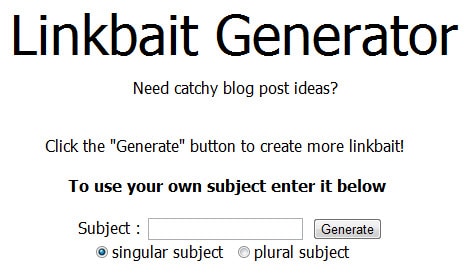
The link bait generator is a simple tool that will generate ideas for headlines for blog posts etc. You simply put a subject into the tool e.g “new media breakfast” and it kicks out ideas.
I don’t really use it to generate headlines but every now and then it can help alleviate creative block.
Why don’t I really use it? Because it throws up ideas like the headline of this post. Still, if you’ve read this far, may be there is some real power in the Linkbait Generator. Head over and have a look.
About the Breakfasts
The New Media Breakfasts are good old fashioned offline presentations. They run monthly in Glasgow and Edinburgh and periodically elsewhere (Aberdeen, Renfrewshire and Fife currently). They frequently attract audiences in excess of 100.
Each presentation focuses on an internet marketing related topic (invariably with a close connection to social media) and are aimed at businesses and organisations wanting to increase their understanding of what online marketing can do for them – a category all Attacat clients fall into!
Recent topics have included Personal Branding, Facebook for Business (if you missed this we will be covering the same ground in our next webinar) and Converting you to Conversion Rate Optimisation.
Regular speakers at the events include Gordon White of fatBuzz (who is the main force behind the breakfasts and the host) and myself. Approximately every other presentation will be delivered by guest speakers who have included the likes of Gordon Macintyre-Kemp and Jennifer Holloway.
Diversion: Me showing off my iPhone skills by timelapsing the arrival of guests at a recent Glasgow breakfast
What’s Attacat’s connection to the breakfasts?
Over the past 18 months we have become increasingly involved in the breakfasts. My initial one-off appearance at the breakfast has evolved into regular appearances. Attacats have frequently filled the guest speaker slots (Ben, Joel and Kiril have all lead a presentation) and fatBuzz are kind enough to make us feel like we are joint venture partners in the Breakfasts, so much so that we now view it as part of the Attacat offering.
A value-add for our clients
Given this evolution we have decided that it is appropriate to cover the cost of any of our retained clients wishing to attend the breakfast. If you would like to come simply, let your account manager know instead of going through the regular booking channels.
Is this not Attacat giving away knowledge that clients would otherwise pay for?
Sure these breakfasts contain a lot of knowledge we do transfer to our clients as part of our day to day business. However knowledge is only a small part of developing a strong online presence for your business. It’s the implementation that is key for most clients.
Another major challenge that many of our clients face is getting others in their organisation to “see the light” and therefore prioritise what needs doing. The breakfasts, like our webinars, represent an opportunity for our clients to give these individuals a background knowledge.
Next Breakfasts
- Social Media: Back to Basics – Edinburgh (11th August 2011)
- Content is King – Glasgow (2nd September 2011), Edinburgh (15th September 2011)
- Facebook for Business – Fife (8th September 2011), In webinar format on 14th September 2011)
(full details on www.newmediabreakfast.co.uk)
Keep informed
Dates etc are always included in our monthly newsletter or you can add yourself to the New Media Breakfast mailing list.
A note of thanks
The New Media Breakfasts would not have been the success that they have become without the support of the partner organisations who do the promotion, organise the venues and tickets etc. They are fatBuzz (Glasgow), Winning Entrepreneurs (Edinburgh), Empire (Aberdeen) and the Renfrewshire Chamber of Commerce. Thank you.